Private Arthur Elders
PERSONAL INFORMATION
MILITARY INFORMATION
- Private (Army).
- Private, 24th Battalion, Infantry (Army).
- Private (Army).
Images
RESEARCH INFORMATION
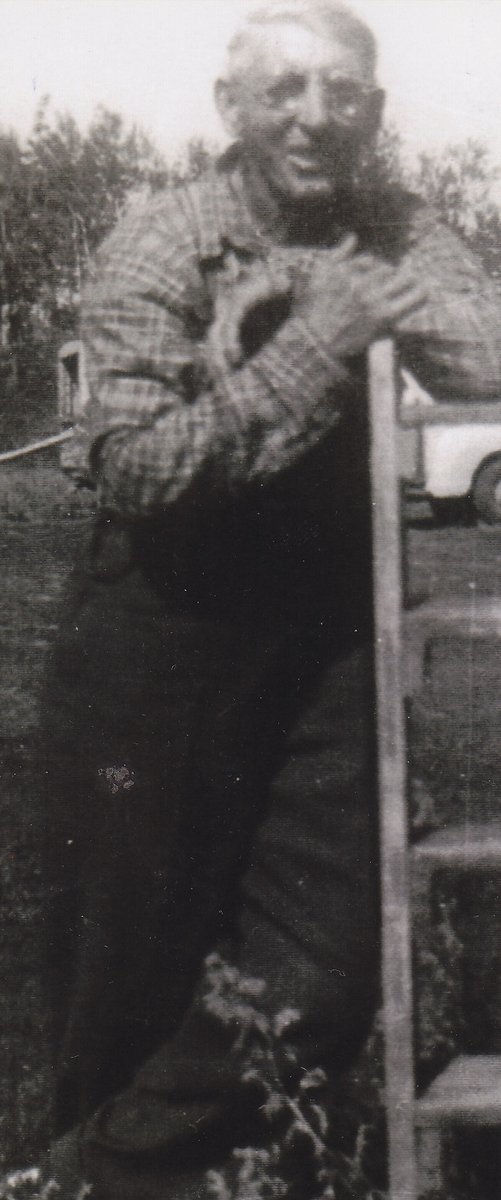
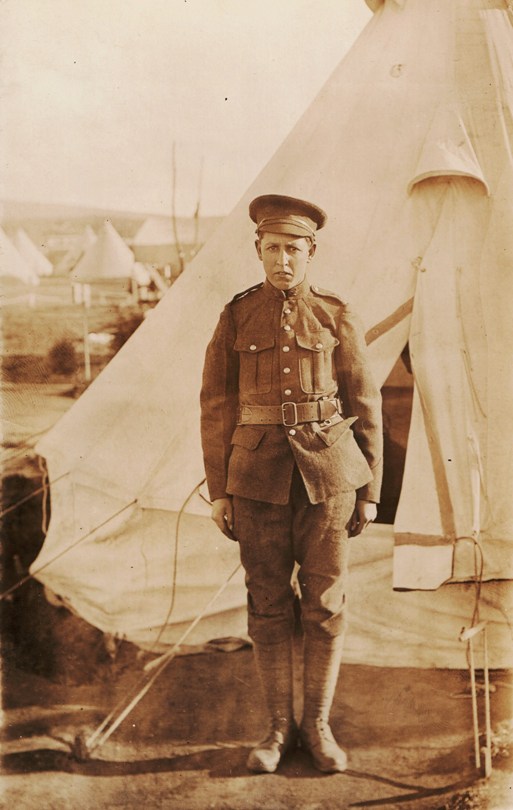
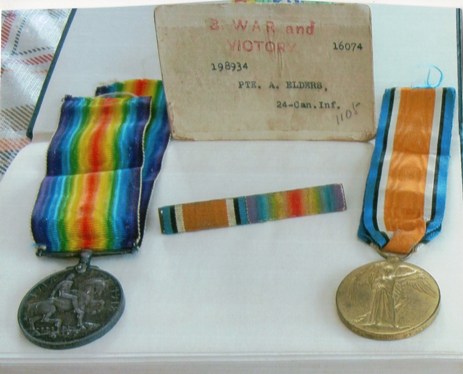
During the First World War Canada sent more than 400,000 troops overseas and almost 150,000 of them were wounded. Among the casualties was Private Arthur Elders who was wounded twice, in March 1917 and more seriously in May 1918. Private Elders survived the war and returned to Canada in 1919.
Arthur was the oldest son of John Thomas and Mary Louise Elders of Kenora, Ontario. John was originally from England and Louise (née Lauzon) was born in Ottawa. They were married on 27 December 1886 in Rat Portage (later called Kenora), in northwestern Ontario, and they had at least seven children, three sons (Arthur, Albert and Frank) and four daughters (Beatrice, Edith Minnie, Emma and Georgina). Arthur, their third child, was born on 08 February 1896. John worked as a carpenter and millwright and he and his family lived at 841 Fourth Avenue South. When the 1911 census was taken Arthur was 15 and working as a messenger for a hotel.
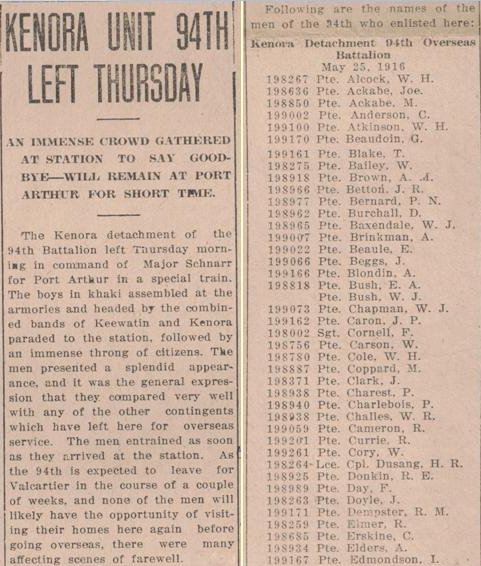
The war started in August 1914 and Arthur enlisted with the 94th Battalion in Kenora on 12 February 1916, four days after his 20th birthday. The 94th had been organized the previous fall and it was based in Port Arthur and recruited throughout northwestern Ontario. On 25 May the Kenora volunteers left for Port Arthur, after parading through town from the armouries to the train station with two local bands leading the way. A large crowd followed the men to the station to see them off. In early June the battalion was sent to Quebec where they spent a short time at the military camp in Valcartier, northwest of Quebec City. They left for England at the end of June but Arthur was held back in Canada for medical reasons. On 24 August he was transferred to a new unit, the 148th Battalion, and he embarked for England with them a month later, leaving from Halifax aboard the SS Laconia. They arrived in Liverpool on 6 October. After two more months of training Arthur was sent to France and transferred to the 24th Battalion (Victoria Rifles), joining them in early December in a draft of 130 men. The Canadian Corps had just been through the Battle of the Somme, where they suffered 24,000 casualties in less than three months. The following spring all four Canadian Divisions were based near Arras in France, training and preparing for the planned assault on Vimy Ridge (9-14 April 1917). The 24th Battalion was stationed near Neuville Saint Vaast, southwest of Vimy, and they went into the front lines on the night of 6 March. Two days later Arthur was wounded when a fragment from a rifle grenade hit him in the eye. He was evacuated to a General Hospital in Étaples and from there to England. He spent several months in convalescent centres and when he was discharged he was temporarily assigned to the 23rd Reserve Battalion. Arthur was back in France in September 1917 and he rejoined the 24th Battalion in November.
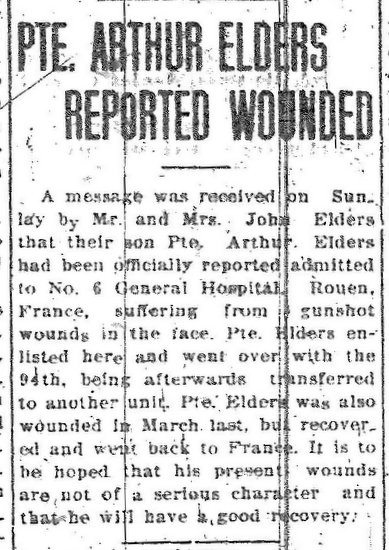
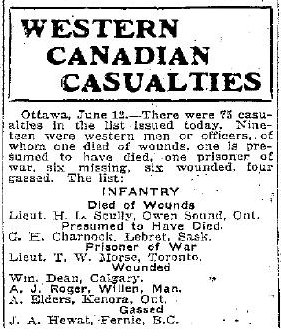
Over the winter and spring of 1917-18 the Canadian Divisions were not involved in any major battles but they were holding a long stretch of the Allied line near Arras in France. The units did rotations in the forward areas and they carried out numerous patrols and raids on the enemy lines. On 22 May the 24th Battalion went into the front trenches for a six day rotation and early in the morning on 27 May the Germans bombarded their area with gas shells and high explosives. Following the barrage two groups of German infantry attempted a raid on the Canadian trenches but they were forced to retreat when they met heavy machine gun and rifle fire. During the fighting that day the 24th Battalion had 17 casualties, four men killed and 13 wounded. Arthur was one of the wounded, with a severe injury to his face including a fractured jaw. He later told his family they thought he was dead until they picked him up and he moaned.
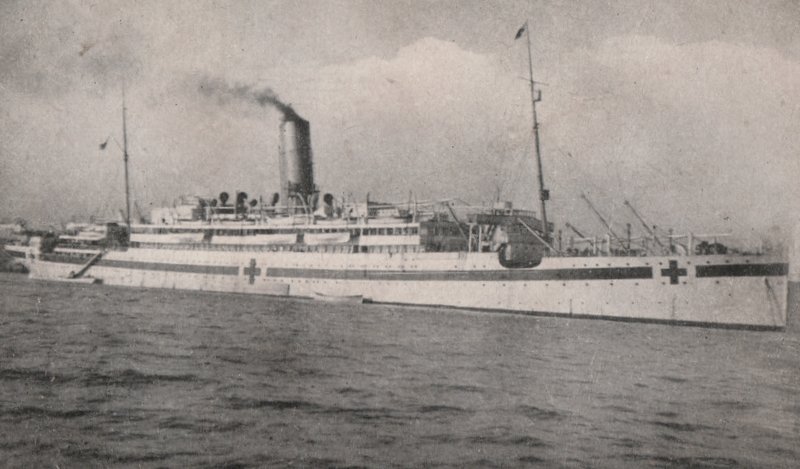
Arthur was admitted to No. 6 General Hospital in Rouen, France and from there he was evacuated to England. He underwent surgery on his jaw at Queen Alexandra’s Military Hospital in Millbank, London. A year later, in February 1919, he was admitted to the Queen’s Hospital in Sidcup, London, which specialized in plastic surgery. While he was there he had reconstructive surgery on his face. Following the treatment Arthur was invalided to Canada, embarking on the Hospital Ship Araguaya on 21 May 1919 and arriving in Montreal about two weeks later via Portland, Maine. Further operations were performed at St. Anne’s Hospital in Quebec and in December Arthur was transferred to Toronto's new Dominion Orthopaedic Hospital for veterans, which had opened earlier that year. While he was in Toronto he developed appendicitis and he had his appendix removed on 25 May 1920. That same day he was discharged from the army.
Following his recovery Arthur returned to Kenora and lived on Fourth Avenue South with his family. His sister Edith Minnie, who was two years older than him, had died in 1909 at the age of 15. In September 1922 his younger sister Emma passed away, at age 24, and in March 1927 his mother died of influenza. In January 1932 Arthur married Marie Robinson and they made their home in Sioux Narrows where Arthur worked as a guide and fisherman. Later he ran a saw mill that had a planer and lumber from his mill was used in the construction of homes in the area. Having worked in the commercial fishing industry for awhile he also made the wooden boxes for shipping fish, delivering them to Kenora. Arthur and Marie raised eight children, six daughters and two sons. The older children were in the first class of students attending Sioux Narrows School when it opened in 1943, in a log cabin near the Sioux Narrows bridge.
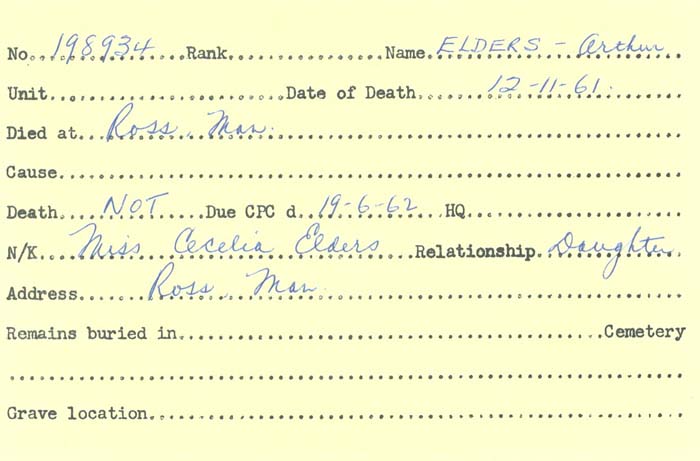
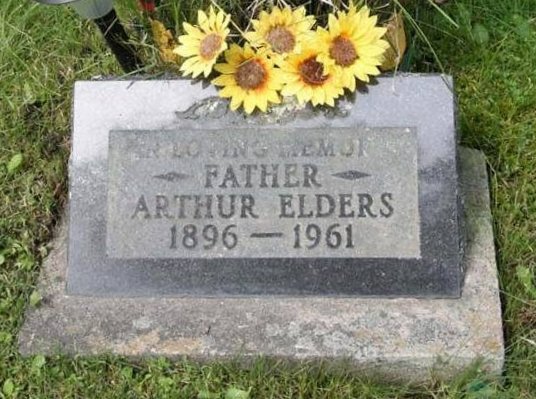
Arthur's wife passed away in March 1959, at age 47. The next year he sold his home and property in Sioux Narrows and moved to Ross, Manitoba, where one of his older daughters was living. He bought a small house there and his youngest daughter Cecelia lived with him. Arthur died in Ross on 12 November 1961, at age 65. He's buried in Lake of the Woods Cemetery in Kenora, along with his wife, his mother and other members of his family. His sister Beatrice married Thomas Harry Purvis, who was also a WW1 veteran. She died in Saskatoon in 1992.
Website of Queen Mary's Hospital Sidcup Archives: Gillies
[Private Army Canadian Infantry 94th Battalion Private Army Canadian Infantry 148th Battalion Private Army Canadian Infantry 24th Battalion ]