
Major Okill Massey Learmonth
PERSONAL INFORMATION
MILITARY INFORMATION
- Major, 2nd Battalion, Infantry (Army). 1917-04-15 to 1917-08-19
- Captain, 2nd Battalion, Infantry (Army). 1917-04-10 to 1917-04-15
- Lieutenant, 2nd Battalion, Infantry (Army). 1916-10-16 to 1917-04-10
- Lieutenant (Army). 1916-09-29 to 1916-10-16
- Lieutenant (Army). 1916-06-15 to 1916-09-29
- Corporal, 2nd Battalion, Infantry (Army). 1916-05-06 to 1916-06-15
- Lance Corporal, 2nd Battalion, Infantry (Army). 1915-06-04 to 1916-05-06
- Private, 2nd Battalion, Infantry (Army). 1915-02-01 to 1915-06-04
- Private, 12th Battalion, Infantry (Army). 1914-09-22 to 1915-02-01
Military Cross (Hill 70)
Description: For conspicuous gallantry and devotion to duty. Finding himself the senior officer of his battalion present after reaching the final objective of an attack, he showed great skill in handling the situation, directing the consolidation and making daring personal reconnaissances under heavy fire. His resource and coolness were responsible for repulsing a strong counter-attack, and he set a splendid example throughout.
Date of award: 1917-08-16
Source: London Gazette No. 30234, pg. 8393
Victoria Cross (Hill 70)
Description: For most conspicuous bravery and exceptional devotion to duty. During a determined counter-attack on our new positions, this officer, when his company was momentarily surprised, instantly charged and personally disposed of the attackers. Later he carried on a tremendous fight with the advancing enemy. Although under intense barrage fire and mortally wounded, he stood on the parapet of the trench, and bombed the enemy continuously and directed the defence in such a manner as to infuse a spirit of utmost resistance into his men. On several occasions this very brave officer actually caught bombs thrown at him by the enemy and threw them back. When he was unable by reason of his wounds to carry on the fight he still refused to be carried out of the line, and continued to give instructions and invaluable advice to his junior officers, finally handing over all his duties before he was evacuated from the front line to the hospital where he died.
Date of award: 1917-11-08
Source: London Gazette No. 30372, pg. 11567
Notes: Major Learmonth's VC is apparently held by the Governor General's Foot Guards' museum on Queen Elizabeth Drive in Ottawa
Images
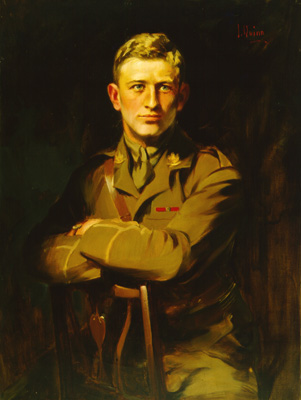
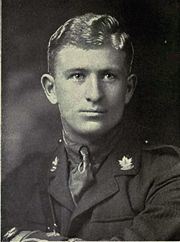
RESEARCH INFORMATION
Son of William Learmonth and Martha Jane Learmonth (nee Richardson). Engaged to be married to Nursing Sister Irene Winifred Lamarche, but the marriage was postponed, and Major Learmonth was killed before the wedding could take place.
For the action at Hill 70 on 18 August 1917.
Towards the end of July 1917, the 2nd Battalion moved into the area around Hill 70. Rumour had it that the Canadian Corps was preparing a two-division attack on the feature and the battalion's presence added credibility to the gossip. Hill 70 was located midway between Loos and Cite St. Auguste, and although classified as a hill, the feature was not nearly as imposing as Vimy but merely the highest contour in the area.
The attack on Hill 70 began in the early hours of 15 August. The 1st Canadian Division held the centre and the 2nd and 3rd brigades sallied forth to do battle, leaving the 2nd as part of the 1st brigade in reserve. They moved forth on 16 August under heavy harassing fire. Suffering numerous setbacks and overcoming several obstacles, the 2nd Battalion relieved the entire 3rd brigade at approximately 0700 hrs on the 17th. The 2nd Battalion held the new position and repelled a strong German counter-attack which stretched all four companies to the breaking point.
The German attack on the morning of 18 August marked the 2nd Battalion's first encounter with flame throwers. The Germans employed these fearful weapons in an attempt to clear the parapet of defenders and the Germans showed great courage pressing home their attack against the withering fire from the 'Iron Second', but was finally forced to retreat having gained none of their objectives.
A particularly valiant display was that of Major Okill Massey Learmonth, commanding No. 3 Company. When part of his line recoiled from a fierce attack, Maj Learmonth himself bombed the attackers, and despite two separate wounds, inspired the men to counter-attack and repulse the Germans. Later, Maj Learmonth sustained a broken leg but continued to direct his company from the bottom of the trench, refusing evacuation. When finally forced to leave, Maj Learmonth first gave a complete briefing to Lt Hugh Smith and then, although mortally wounded, forced his stretcher bearers to take him to report to battalion headquarters. Maj Learmonth, who was with the battalion from the beginning and was wounded as an enlisted man at Ypres, died in the dressing station below Hill 70. For his courage and extreme valour he was awarded the Victoria Cross.
Wounded on Somme and given 3 months leave (30-06-1916 to 30-9-1916). Wounded again at Hill 70 and died Aug. 19, 1917.