
Corporal William Lewis
PERSONAL INFORMATION
MILITARY INFORMATION
- Lance Corporal, 8th Battalion, Infantry (Army).
- Corporal, 8th Battalion, Infantry (Army).
Images
RESEARCH INFORMATION
Shortly after Britain declared war in August 1914 the Canadian government proposed raising an Expeditionary Force to send overseas. By late September a contingent of 32,000 volunteers had been assembled at the new military camp in Valcartier, Quebec. Two thirds of the men in this 1st Canadian Contingent were born in the British Isles including Corporal William Lewis, who was killed at the Battle of St. Julien in April 1915
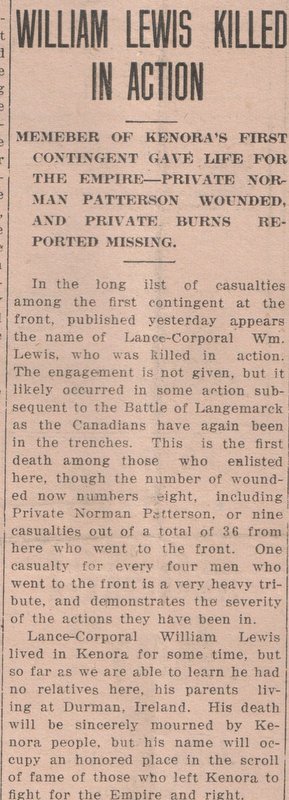
William was the son of Robert Joseph Lewis and Sarah Jane Lindsay of County Antrim, Ireland. Robert and Sarah were married in 1887 and over the next 18 years they had eight children, five sons (John, William, Henry, Joseph and Harold) and three daughters (Bessie, Sadie and Isabel). They lived in Aghalee, a small village southwest of Belfast, where Robert was a farmer. William, their second oldest son, was born in August 1892. At the time of the 1911 Irish census he was 18 years old, working as a chemist's assistant and living at home with his parents and four younger siblings. Not long after that William immigrated to Canada and in 1914 when the war started he was living in Kenora, Ontario and working as a druggist.
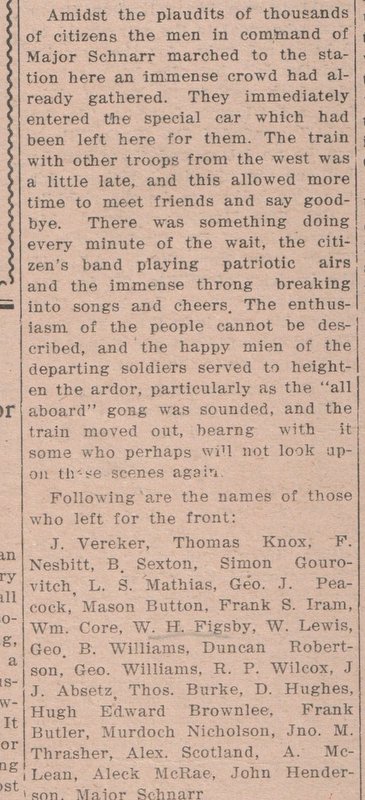
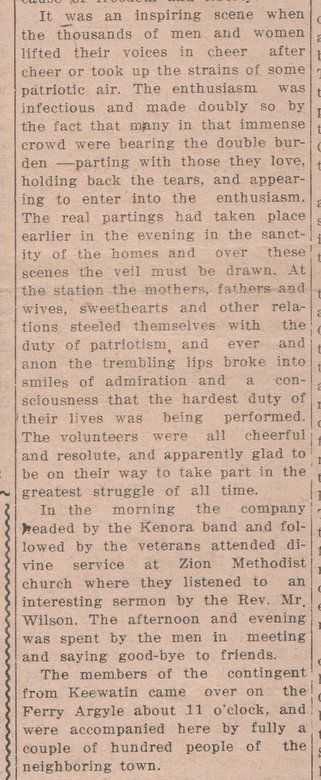
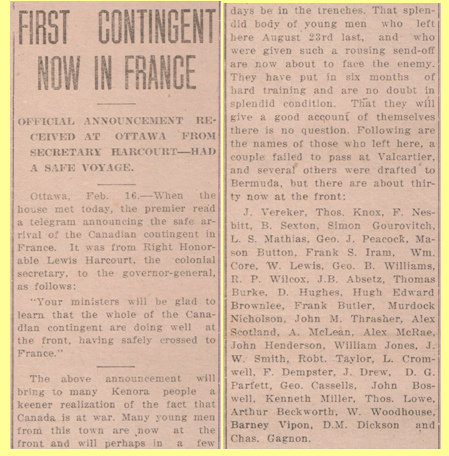
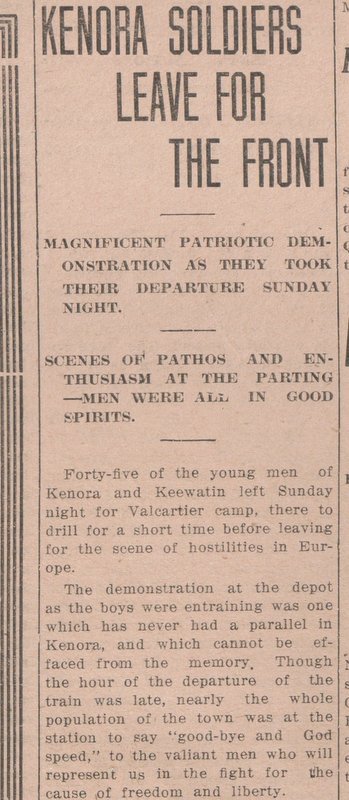
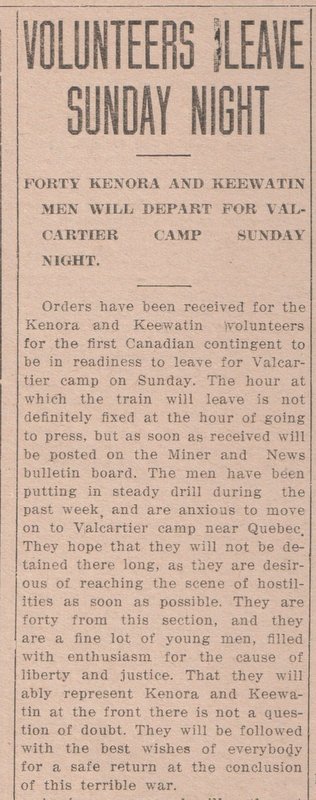
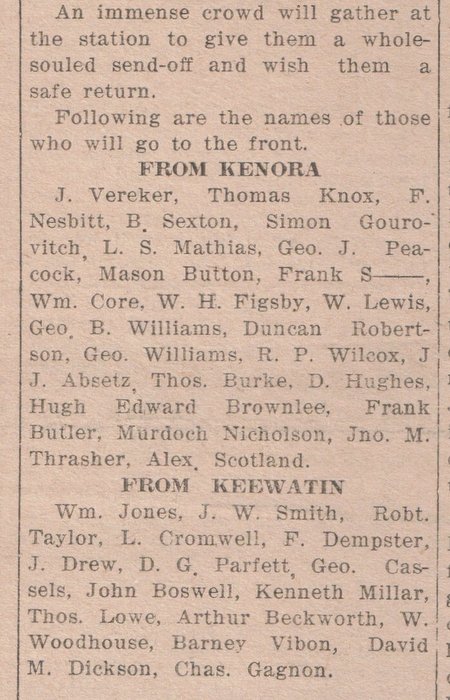
Britain declared war on 4 August 1914 and three days later mobilization orders were issued in Canada. Officers and volunteers were told to go to Valcartier, an area about 20 miles northwest of Quebec City that would become the site of a large military camp. William left Kenora by train on 23 August 1914, heading to Quebec along with about 40 other local volunteers. Thousands of people turned out at the Kenora station to cheer and support the men as they left. At Valcartier they underwent training, medical tests and inoculations. William's medical exam on 8 September tells us he was 5'10" tall with blue eyes and light brown hair. He was found fit for service and on 22 September 1914 he enlisted with the 8th Canadian Infantry Battalion, a new unit made up of recruits from Manitoba and northwestern Ontario. In October the 8th Battalion embarked for England, leaving from Quebec City on the SS Franconia. They were part of a convoy of 32 transport ships protected by a Royal Navy escort because of the danger from German submarines. The convoy arrived safely in Plymouth, England on 14 October.
Chlorine gas was first used by the Germans on a large scale on 22 April 1915 at Gravenstafel Ridge and the 8th Battalion was hit by it during a second gas attack two days later. They suffered heavy casualties from the poison and in the fighting that followed - the Battle of St. Julien - when German infantry advanced behind the cloud of gas. From the War Diary of the 8th Battalion, 24-25 April 1915, Gravenstafel: "The trenches were all attacked at night, and all the men in the trenches except the reserves were weak from fumes - in fact some men had already died from fumes."
The Canadians held the line for three crucial days, at times engaging in hand to hand combat, until they were relieved by British units on 25 April. William was killed in action on the last day, 25 April, one of 6000 casualties suffered by the Canadians in the battle.
William's final resting place is unknown. He is commemorated on the Menin Gate Memorial (Ypres, Belgium), which bears the names of more than 54,000 men who died in the Ypres Salient and have no known grave. He is also commemorated on the WW1 Roll of Honour for the 8th Battalion (Royal Winnipeg Rifles) and on page 24 of Canada's First World War Book of Remembrance, displayed in the Peace Tower on Parliament Hill in Ottawa.